
Traffic Rules In Oman - Laws Every Driver Should Know
Understanding the Traffic Rules in Oman is essential before renting a car or driving across the country. Oman offers modern highways, well-developed infrastructure, and high-quality roads, making travel comfortable for both tourists and residents.
Drivers must strictly follow local traffic laws, including speed limits, seat belt laws, and mobile phone use restrictions while driving. Traffic in Oman moves on the right-hand side of the road, and international visitors can usually drive using a valid international driving permit.
Whether you are exploring Muscat, planning a road trip to Salalah, or visiting mountain destinations like Jebel Akhdar, knowing the driving rules in advance will help you stay safe, avoid fines, and enjoy a smoother travel experience in Oman.
Important Driving Laws in Oman
Before driving in Oman, it is important to become familiar with the country’s traffic laws and driving regulations. Oman has safe and well-maintained roads, and traffic laws are strictly enforced across cities and highways. Drivers are expected to respect speed limits, obey road signs, and follow local driving laws carefully.
For tourists using a rental car in Muscat, understanding the basic driving rules can make traveling easier and help avoid unnecessary fines or legal issues.
Some of the most important driving rules in Oman include:
- Drivers must wear seat belts at all times.
- Using a mobile phone while driving is prohibited unless using a hands-free system.
- Traffic in Oman moves on the right-hand side of the road.
- Speed limits are monitored by traffic cameras across cities and highways.
- Driving under the influence of alcohol is strictly illegal in Oman.
- Drivers should always carry their driver’s license, passport, and vehicle documents.
Speed Limits in Oman
Speed limits in Oman are strictly enforced through traffic cameras and police monitoring systems across cities and highways. Drivers should always pay attention to road signs because speed limits may vary depending on road type and traffic conditions.
Typical speed limits in Oman include:
- Residential areas: usually between 40–60 km/h
- Urban roads: commonly around 60–80 km/h
- Highways and express roads: generally between 100–120 km/h
Tourists renting a car in Muscat should remain careful, especially when driving on highways or near roundabouts where speed limits may suddenly decrease. Excessive speeding can result in heavy fines, black points, or other legal penalties.
For a more detailed guide about speed cameras, fines, and highway regulations, read our complete article about speed limits in Oman.
Roundabouts and Road Signs in Oman
Roundabouts are one of the most common features of road design in Oman, especially in Muscat and other major cities. For tourists unfamiliar with local traffic systems, understanding how roundabouts work helps drivers navigate safely and confidently in Oman. Vehicles inside the roundabout have the right of way, and entering drivers must slow down and wait for a safe gap before merging.
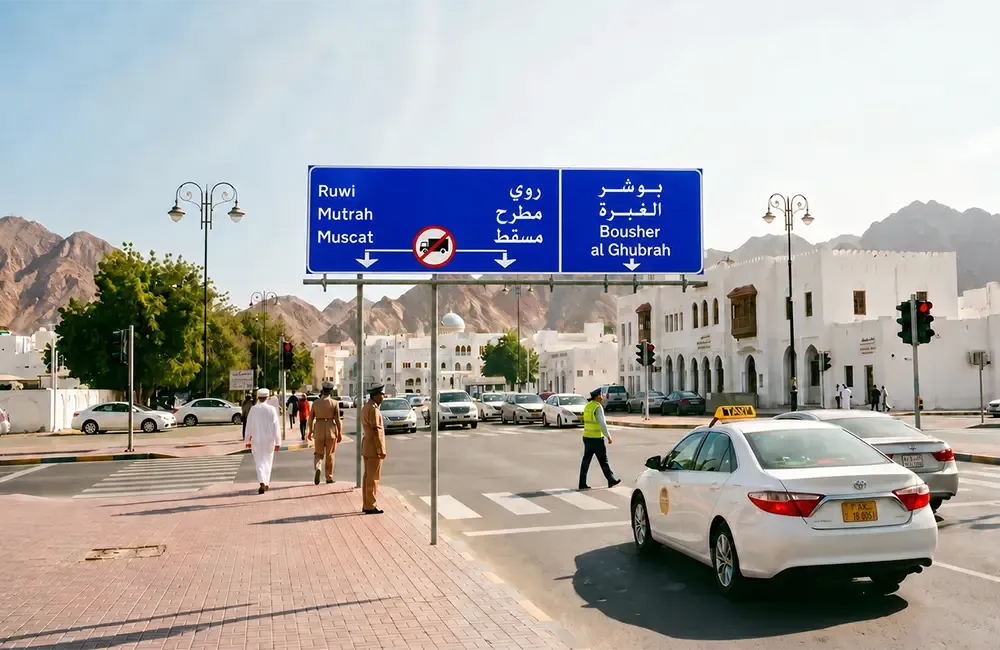
Road signs in Oman are modern, clear, and written in both Arabic and English, making navigation easier for international visitors. However, drivers should remain alert because traffic flow around busy roundabouts can move quickly during peak hours.
Important things drivers should know include:
- Entering drivers should always give way to vehicles already inside the roundabout.
- Drivers should use turn signals before exiting.
- Some large roundabouts have multiple lanes, so choosing the correct lane early is important.
- Sudden lane changes inside roundabouts can be dangerous and may lead to accidents.
- Pedestrian crossings are common near busy intersections and city centers.
Tourists using a rental car in Muscat should pay extra attention when driving through crowded urban areas, especially during evening traffic hours. Learning common road signs and roundabout rules can make driving easier and help visitors avoid confusion while traveling across Oman.
Driving Fines in Oman

Traffic fines in Oman can be costly for serious violations and are enforced through automated cameras and police monitoring systems. The Royal Oman Police applies a clear penalty system based on the severity of each violation, especially for speeding, red-light running, and dangerous driving. Even small violations can result in immediate fines, and repeated offenses may lead to higher penalties or legal action.
Typical traffic fines in Oman include:
- Minor speeding (within 10–20 km/h over the limit): around 10 OMR
- Moderate speeding (20–40 km/h over the limit): around 15–30 OMR
- High speeding (50–80 km/h over the limit): around 35–50 OMR
- Extreme speeding (more than 80 km/h over the limit): up to 50–75 OMR
- Running a red light: around 15–30 OMR
- Using a mobile phone while driving: around 10–30 OMR
- Illegal parking: around 5–15 OMR
Other important points to know:
- Fines are automatically recorded by traffic cameras across highways and cities.
- Traffic violations near roundabouts, schools, and hospitals may result in stricter penalties.
- If you are using a rental car in Muscat, fines are usually processed through the rental company and later charged to the driver.
- Severe violations, such as reckless driving or excessive speeding, may also result in black points or vehicle impoundment in some cases.
Tips for Tourists Driving in Oman
Driving in Oman is generally safe and convenient for tourists, but a few practical tips can make your journey much smoother and more enjoyable. Roads are modern and well-maintained, although traffic laws are strictly enforced across the country.
Key tips for tourists include:
- Always carry your driving license, passport, and international driving permit if required.
- Follow speed limits strictly, as speed cameras are common on highways and city roads.
- Be especially careful at roundabouts, especially during busy hours in Muscat.
- Avoid driving long distances at night in desert or mountain areas.
- Use GPS navigation, but always pay attention to road signs.
If you are using a rental car in Muscat, inspect the vehicle before starting your trip and understand the insurance coverage.
For a better experience, many travelers prepare in advance by learning basic driving rules in Oman and understanding local driving etiquette.
Is Driving in Oman Safe for Tourists?
Many visitors choose to rent a car in Oman because the country offers safe roads, modern infrastructure, clear road signs, and relatively low traffic levels. Roads between major cities are well-maintained, making long-distance travel comfortable.
However, safety depends on following traffic rules, respecting speed limits, and staying alert, especially when driving on desert or mountain roads. Overall, driving in Oman is considered safe for drivers who follow traffic laws and drive responsibly.